The Raspberry PI

As anyone who has been reading the tech section of any website will know, the Raspberry PI (version B) was released a couple of weeks back.

The Raspberry PI is a credit card (85.60mm x 53.98mm x 17mm) sized computer that runs a flavour of Linux as its O/S (a version of Fedora I believe has now been released).

The Raspberry PI foundation has the goal of releasing a cheap computer that can be given to school children to encourage them to explore the world of programming. A whole generation of programmers was created off the back of the Spectrum ZX, Commodore 64 and similar during the 1980’s  and there is hope that this could spark a similar interest in school children today and help to boost the UK’s standing in I.T education.

The Raspberry PI foundation is a charity so they have tried to keep the cost of the machine down, the version B is available for $35 in the US. Whilst there was some confusion over prices on the website, due to exchange rates, local taxes and similar, I was able to pick one up via Newark electronics  for exactly $35 – a total bargain!

A quick overview of the hardware specs shows it includes:

  • RCA
  • 2 USB ports
  • HDMI
  • SD card
  • GPIO
  • 256 MB RAM CPU & GPU
  • LAN
  • 700 MHz ARM processor

You can see a picture of it here from the Raspberry PI foundation website:

Raspberry PI version B

Raspberry PI version B

This looks like it would be a perfect tool to include in my home heating system. A machine this small could be placed in a small 3D printed case and mounted to a wall and then connected up to the wireless router via the LAN port. In fact Shapeways already have a 3D printable case ready to go, you can see it here.

The specs show it would also easily handle the sort of algorithms required to optimize the heating system, so it could act as the controller and dump data to the machine that will act as the DB server.

I’ve placed my order and it doesn’t arrive until May, so this will give me time to work on the Thermostats in the interim.

I’ll keep you posted on the Raspberry PI.
Welcome to Intelligent Heating – a journey through home-brew heating

Introduction

This blog will detail my journey through building an intelligent home heating system. Using free and open source software such as: FreeBSD, Python, PostgreSQL and HTSQL, open source hardware such as: Arduino and Raspberry Pi and  a host of other cool additions (including components printed on a MakerBot 3D printer) I am going to overhaul my heating system and blog the progress along the way.

Some background

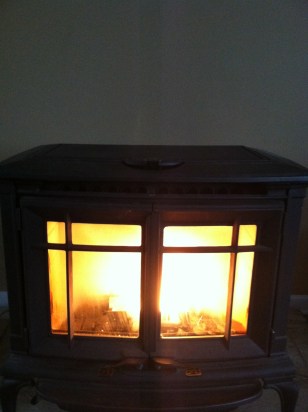
We currently heat most of our house using a pellet stove. A pellet stove basically burns compressed wood or biomass pellets (in Italy sometimes olive pits) to create a source of heating for your home. A couple of tons of pellets will last us all winter and normally costs between $400 – $600 depending on type and supplier.

img_0202

In February 2012 our pellet stove stopped working. When we spotted a problem with it, we consulted the user manual, took the side off and cleaned the whole stove out including the fan, but this didn’t have any effect, so we called out the repair guy. Unfortunately it was going to take a couple of weeks until he could get to us so we had to fall back on the old baseboard heaters that came fitted when we bought the house.

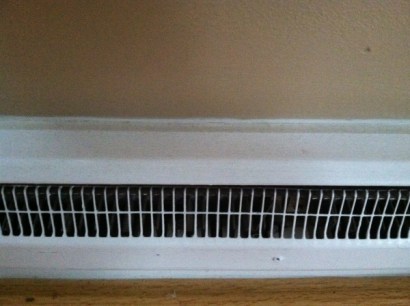
Old base board heaters

Old base board heaters

Throughout the house we had the thermostats set on the baseboard heaters for around 60 degrees F which supplemented the heat from the pellet stove. After receiving our first winter electricity bill, we decided to cut down on the use of the heaters to keep costs low. However once the pellet stove broke we had little choice but to use the baseboard heaters to keep the house warm, and we soon found out this had costs us a small fortune.

These things are possibly one of the most inefficient means of heating a house. This we discovered after receiving a $600 electricity bill from the UI company for a single month… ouch.

For those of you not aware, Connecticut has some of the highest electricity rates in the country. The 2008 OLR report placed CT in the number 2 spot when it comes to electricity costs. Coupled with the tropical storm Irene last year and the freak October snow-storm CT residents were not only dealing with high kWh costs but also periods of blackouts running into the days due to the damage caused by falling trees.

The combined cost of electricity and lack of service at points led me to investigate, how could we power and monitor our heating systems at minimal cost whilst optimizing our electricity usage and room temperature?

I hope to answer the above questions with this blog, and if lucky be able to demonstrate a cheap and cool way of doing it.